The phrase New Science might remind you of one Giambattista Vico, or maybe not as the case may be. The sub-phrase The In-Take and the Out-Take may or may not remind you of the Bonzo Dog Doo-Dah Band. If not, it should – and now will, thanks to this apposite if slightly inconclusive musical number:
Such is the power of suggestion. The philosophical point – which some say Vico was the first to make – is that the only things we can really know about are not things which are independently ‘out there’, as they say, but rather things that we made ourselves.
Thinkers as diverse as Collingwood (philosophy of history) and Wittgenstein (philosophy of mathematics) seem to be saying similar things, but may not have read Vico himself – who was unknown to mainstream analytical philosophy until quite recently.
So, was Vico a telepath, I hear you ask breathlessly? We-ell, he may have had a kind of causally inexplicable precognition of some contemporary strands of thought, but I am not quite ready to claim any magical powers for him – just yet.
Instead, I shall start by explaining a vital distinction in the philosophy of language which we have been assuming implicitly, namely that between using and mentioning a word or sequence of words. (The relevance to Vico and to more general issues about telepathy will eventually become apparent.)
A crude way of explaining the distinction is to say that when we mention a word it is the word itself that we are talking about, whereas when we use the word it is what the word stands for that we are talking about.
For example, when I say that ‘Fido’ has four letters, whereas ‘dog’ has only three, I am mentioning the words ‘Fido’ and ‘dog’.
When I say that Fido is a dog, I am using the word ‘Fido’, for it is Fido himself that is a dog, not the word ‘Fido’.
If you are unsure about all this, remember that the standard sort of doggy Animal Shelter will contain labradors, chihuahuas, ordinary mongrels and so forth, but that nouns, verbs, adjectives and prepositions and other breeds unknown to the Kennel Club are unlikely to be found, unless the Animal Shelter in question is seriously disorganized.
Also, should you say that dogs have four letters as well as four legs (though only one tail), you are clearly either rather confused, or else trying to be as clever in your writing style as that celebrated logician, Lewis Carroll.
Okay, so we can all understand the difference between words and things, except perhaps a certain kind of linguistic philosopher who thinks that The Meaning of Words is much more important than The Meaning of Life – or so a certain kind of hostile critic would have us suppose.
It is also obvious that the word ‘snow’ has no colour any more than any other bit of language, whereas snow itself, the stuff you can ski on – and from which jolly smiling snowmen are made – is typically white (or at least appears to be to creatures with a human visual apparatus when viewed under normal lighting conditions – i.e., not too much sunshine lest it look rather bluish when in shadow).
It therefore also follows that there is all the difference in the world between these two complex sentences:
(1) ‘Snow is white’ is true-in-English if and only if snow is white
and
(2) Snow is white if and only if snow is white
Why is that? Because the sentence ‘Snow is white’ is mentioned when it first appears in (1) – the quotation marks are a dead giveway – but is used everywhere else it appears, in both (1) and (2).
But aren’t they still saying the same thing, I hear some of the slower students at the back of class ask? And why say ‘true-in-English’ and not just ‘true’?
Well (sigh), the thoroughly English sentence ‘Snow is white’ just might, for all you know, be how you say ‘My hovercraft is full of eels’ in Hungarian (though pronounced with a slightly odd accent), and we don’t want to find ourselves looking for hovercrafts when we are about the venture out on to the slopes (they make terrible skilifts, even in Hungary).
I hate to sound sarcastic, but I can find slow students rather fatiguing. Oh all right, here is a comfort break, but don’t overdo the Glühwein.
I see that the slower students have finally – finally – got the message. So it is hardly worth saying that if I translate (1) and (2) into French (Hungarian is too dangerous for most purposes), we get:
(1*) ‘Snow is white’ est vraie-en-anglais si et seulement si la neige est blanche
and
(2*) La neige est blanche si et seulement si la neige est blanche
Now, Pierre, your French ski instructor whose English is none too brilliant but who knows all about snowploughing and might even carry your skis for you if you ask him nicely, will probably have noticed that both (2) and (2*) are true if slightly uninformative.
But he may well not realize that (1*) is true at all.
It follows that Pierre (who, by the way, moonlights as a brilliant logician – French logicians don’t bother to learn English, by the way, I mean why should they, mon Dieu??) does not realize that (1) – our original sentence – is true either.
Why? Because (1) and (1*) have exactly the same meaning!!!
Yes (sigh), it would simply not be a good translation if the meaning were not to be exactly the same – and no, this is not the time to talk about radical translation or anything weird like that.
So if we can get Pierre to realize that (1) is actually true, he will be definitely on the way to improving his English. Of course, he also needs to understand just what his English skiing students are trying to tell him when they shriek out, in English, that grass is green when they run out of snow (which tends to happen around Easter time thanks largely to global warming), but I dare say that most of you will have figured out the answer to that problem. Yes, quite.
Incidentally, any sentence which looks like (1), but might involve a sentence other than ‘Snow is white’ as a constituent is known in the trade as a T-sentence. The first logician to come up with this idea was the Polish logician Alfred Tarski, so one can only fear that he attempted to do his logic in Polish, not English. Fortunately for him (and for posterity), he managed to evade the Nazis and emigrate to America where he was able to make some real sense – at last.
Just be thankful that he was not a Hungarian, otherwise British comedy would not be the same.
Anyway, some music would be nice – would it not? – and this time from a Canadian-American lady who seems a little unsure of herself …
Anyway, most of you have probably heard enough about T-sentences, but the slower students may need perhaps a little more instruction, so here we go.
Clearly, the more T-sentences you learn the better your knowledge of English, but as a method of teaching it is time consuming. There are a lot of sentences in English, and it is a bit wasteful of time and energy to have to deal with ‘Snow is white and grass is green’ when ‘Snow is white’ and ‘Grass is green’ have been separately dealt with.
Still, even schoolchildren can be taught what is sometimes called ‘baby logic’ which begins with a fancy looking array of Ts and Fs called a truth-table, and Tarski (remember him – the Polish-American gentleman we mentioned earlier?) made it nice and straightforwardly easy to learn.
Of course, some of the dimmer students cannot handle logical symbols, and so have to have the rules of the grammar of ordinary English explained to them at tedious length, and even spend time worrying explicitly about how many T-sentences they really need to learn and why, why, why do they have to do this sort of thing anyway. Et cetera.
I remember in the 1970s, when I was a postgraduate student at Oxford and was allowed at long last to use the Philosophy Sub-Faculty building and library (then at 10 Merton Street), I was disappointed to find there, in this hallowed spot – what? Everything I dreamt of? Well, in particular, did I find …?
+The Ryle room? Yes.
+A coffee machine? Yes, that too.
+Books and journals? Yes, lots.
+Other research students? Er … well, no, not exactly.
You see, instead of other postgraduates, in the accepted sense of the word, an odd mixture of people roughly my age all doing some sort of remedial course in T-sentences were clogging up the corridors and seminar rooms. Such is philosophical fashion.
The upshot is that I never did get to find out what everybody else was researching on in analytical philosophy at that rather special time of my life. A-a-ah!!
Still, there is always consolation in music …
Well, one’s early adult years always do bring some sort of disappointment, but one must persevere nonetheless.
Now, a much more serious problem about the mention/use distinction concerns some basic epistemology, namely how you can tell whether a given word really is being mentioned rather than fully used.
The standard device is to use single quotation marks, but the trouble there is that they are so little that they are easily overlooked. Indeed, like those elementary particles that the physicists keep going on about, they are so little and so absurdly inconspicuous that one wonders why they bother to exist at all.
It doesn’t help that they can be used for other purposes such as to indicate direct speech, or even (gasp, horror) as scare quotes. (No, I won’t tell you what they are, O Best Beloved, so don’t worry.)
It also does little to improve their sense of self-worth that their role can be taken on by more robust indicators such as italicization (though that is a little archaic), a difference in font (used by formal logicians who tend to confuse everyone by distinguishing between an object-language and a metalanguage), or even by indenting in a whole new paragraph.
I confess that I felt impelled to use that last trick with the rather long-winded sentences written in the lines numbered as (1), (2), (1*) and (2*). Not the mention (eek!) the bold face trick.
Incidentally, a change of colour together with underlining usually indicates a Wikipedia link, so don’t mess around with your computer mouse when hovering over the affected area unless you really, really know what you are doing.
The consolation for the poor little quotation mark here is that these other rather flashy devices can also be used (and very misleadingly) to indicate other things altogether, such as emphasis, though the fashion is now to use bold-face, rather than italics since it is easier on the eye.
By the way, emphasis does not easily mix with quotation, as the following observations demonstrate.
***
It is best to start with simple communications, such as little scraps of paper with short messages on them such as
Cynthia is horrid
(Notice the indentation. Mindful of litigation, I have only mentioned not used the relevant sentence. I am quite sure that the young lady in question is in reality quite delightful, and shall instruct my solicitors accordingly. )
Now, should this missive reach Cynthia herself (and she may or may not be the intended recipient), it is fair to say that she will not be overly pleased. Irony is not always best conveyed on little scraps of paper, as most of us learnt long ago.
Now, matters are quite different if only the mention/use distinction is properly observed. Put the offending three words inside quotation marks, and nothing offensive is said at all. Indeed, nothing at all is said, offensively or otherwise.
True, the presence of quotation marks may not impress Cynthia all that much since they probably look just like two very little specks of dirt.
Saying something about this three-worded sentence would help, but here we reach another problem, as the following indentations show:
‘Cynthia is horrid’ has three words
and
‘Cynthia is horrid’ is smelly
I think that we can all agree that la belle Cynthia is not going to be impressed with the latter, being, as it is, both offensive and ungrammatical. The former is better, though why anyone wishes to be told the obvious is less clear.
One could, of course, be giving out the answer to the teacher’s question should the lesson be on elementary mathematics that has somehow undergone a linguistic turn of some kind (anything was possible in Oxford in those days). But we could easily get side-tracked into wondering why this three-worded sentence should be both three-worded, true-in-English (arguably) and yet somehow incapable of giving off a whiff of something unpleasant, so let us move rapidly on.
By the way, informing Cynthia that she is lucky to get a sentence at all (let alone an eternal one) rather than a genuine proposition is unlikely to improve the situation, I regret to say. And we won’t get into the question of what so-called angle-brackets are for (we just didn’t have them back then).
No, a more promising line of linguistic development is to stay on the ‘use’ side of the ‘use/mention’ distinction, and engage in some delicate syntactical complications. For example, a missive along the lines of
Aloysius believes that Cynthia is horrid
is far more likely to provoke a reaction than anything sent so far. Of course, if you just want to be weird, you could instead inform your readers that
If Cynthia is horrid, then Drusilla is even horrider
and see what happens. The logician in us all can merely smirk if Cynthia still feels in the mood to take offence.
Naturally, if you really want to show off your mental prowess, you could always go for something ultra-sophisticated, such as
Aloysius believes that Bertie wants it to be true that if Cynthia is horrid then Drusilla is ……even horrider
However, beware the faux-simplicity of
It is not the case that Cynthia is horrid
Logicians tend to replace the first 6 words of the above with a tilde which, for your information, is a sort of little twiddly mark that Spaniards sometimes put on top of the letter ‘n’ in order to be different, and Cynthia is not necessarily all that observant.
Anyway, your teacher needs a comfort break, even if you don’t. There will be a short written examination after the intermission, so I suggest you use your time well.
Still, all this shows is that language is an extremely poor and clumsy way of transmitting and receiving ideas. It is the ideas themselves (and not the words that we use to try to express them) that we should be focusing on, if only because we are more likely to see what is important.
For example, it is clear that there is a vital difference between talking about an idea and actually endorsing it, and this is something like the mention/use distinction but applied directly to ideas and not to their linguistic cloaking.
For example, there is a vitally important difference between talking about communism and talking communistically, even though – perhaps especially because – many people cannot see it.
For example, the McCarthyite witchhunt of the 1950s – that is still within living memory – was partly just a revolt by stupid and unpleasant people against liberal intellectualism as such, and this itself explains a lot.
But also many people simply could not understand (and not through lack of trying) that, just because an overheard conversation is about communism, it really does not follow that the speaker is a communist. She might be giving a closely reasoned account of why such world-systems fail, for example, and does not deserve her promising acting career to be brought to an abrupt end by being put on the Hollywood blacklist.
Did Senator Joe McCarthy himself understand this? An interesting point.
Still, all this was a long time ago, Ordinary People are much better educated than they were back in the 1950s, and you are not likely to be accused of Treason just because you hold a minority view, even though minority views must, by definition, be false-in-a-genuine-democracy. Needless to say. And don’t bother about being overheard, as electronic eavesdropping is usually illegal.
Now treat this example as being on a par with Cynthia’s problems if you dare.
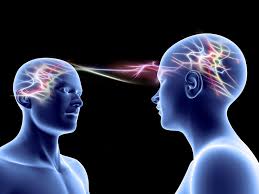
The simple reality is that if people stopped talking and listening to each other, and instead just beamed telepathic messages at each other, everyone would get on a lot better. There would simply be no room for misunderstanding.
I dare say that the traditionalists among you are still going to need a little more convincing, even if only a fanatical skier could imagine that the whiteness of snow was a more important trope than the silliness of communism. And nothing really stopped Tarski from choosing (the Polish version of)
‘Communism is silly’ is true-in-English if and only if communism is silly
over his original wintry example, you might be well advised to remember (it is always just possible that even Orwell’s O’Brien – from 1984 – might be impressed if you put enough emphasis on the penultimate word).
At any rate, it was clear to our hero, Winston Smith, that the political system he was living under was silly, whereas anyone can get confused about their mental arithmetic, even concerning whether two plus two equals five. So why bring arithmetic into it, we might wonder? Children don’t appreciate it, as the following musical number proves decisively.
Okay, so it is time to get a little clearer about the traditional distinction between simple and complex ideas. The point that the traditionalists are perhaps trying to make is that ‘Snow is white’ is simple in a way in which ‘Communism is silly’ is not.
Is that because the former is an atomic sentence, whereas the latter is not, we ask hopefully?
Err, well no, comes the only possible answer.
(Incidentally, an atomic sentence is not a sentence about atoms, O Best Beloved.)
Is it that the whiteness of snow corresponds to a relatively simple idea, whereas the silliness of communism is a much more complex idea, we say?
It is clear that the traditionalists are now looking much happier than before, and we all now prefer reductionism (explaining big things in terms of their smaller components) to holism (the opposite to reductionism).
True, analytical philosophers, following Frege, think that individual words come second to the sentences that contain them, but that is the exception that proves the rule. (On this subject, don’t talk about Montague Grammar, or else there will be civil war between the Philosophy and Linguistics departments. Just don’t.)
But the locus classicus (as posh people put it) of what we now call the ideational theory of meaning is classical British empiricism, in particular the views of Locke, Berkeley and Hume.
These three really are as British as boiled beef and carrots, as the saying goes, unlike Wittgenstein (do we have to talk about him again, I hear someone ask nervously?).
Now, a simple idea, but better still, a simple impression as Hume puts it, is something like that very vivid impression of whiteness you get when you are caught in a small avalanche. There is nothing complex or subtle about it – unfortunately.
Explaining this idea to Cynthia might be hard especially if the paper on which you are writing is also white, but fortunately, even Hume’s simplicity has its limits, for colour is intimately connected to contrast. A given grey surface will look black against a very bright background, but will look pure white against a really dark background.
So, does this really prove that black is white, as even trainee philosophers are required to be able to do? Yes, O Best Beloved, but rhetoricians do it better (they charge money, though).
Explaining about different shades of grey to Cynthia might prove more embarrassing than you think, and is probably illegal anyway. At any rate, don’t assume that ‘Snow is white’ stands for a particularly simple idea.
Still, it is immediately clear that snow is not pink. That we can clearly and distinctly perceive to be true, whereas the proposition that communism is not fascism is rather different in this respect. Locke once talked of an instance of the fingerpost in this respect, by the way.
But what simple impression does ‘Snow is not pink’ correspond to?
The only thing I can think of is a particularly vivid image of pink snow with some sort of ‘yuk’ factor attached to it. Well, the next movie clip is going to be a sure-fire success in that department.
Yes, indeed. Now if that admittedly rather complex sequence of impressions does not convey the idea that snow is not pink, then nothing will. It is what is immediately learnt from it (of course, one learns a few other things as well, but why hold that against it?)
What about the allegedly more complex impression that communism is silly (or, to make it a negative idea so that we compare like with like, the impression that communism is not sensible. This is rather easier, and here we go …
The Berlin Wall (known to the cognoscenti as Die Mauer) is iconic, and so is Diana Rigg as Mrs. James Bond – as she briefly was to become before Blofeld shot her dead.
Some images are worth a thousand words, and the impressions they make on all (except the over-educated) massively simple.
Of course, analytical philosophers (who are still slightly under the influence of logical atomism – or else a rather implausible pre-Kantian conception of the immediate contents of perceptual experiences – will say that the whiteness of snow is simpler and more relevant to our thought about the Nature of Reality than the silliness of communism.
I can only say, with all the strength of my conviction, that nobody else agrees. It is worth exploring why.
In the meantime, here is a nice simple piece of impressionistic music. Not written by John Barry.
Anyway, let us return to the thesis that linguistic communication is irreversibly flawed and needs to be replaced by telepathy.
Now, it may occur to the more conservative members of my audience that it is unwise to destroy all that you currently have (even if flawed) so as to make room for The Great Unknown.
A short response to that rather timid observation is that that is exactly what most Ossis (as the Wessis contemptuously called them) thought when their dear old Anti-Fascist Protection Rampart came tumbling down.
Can one really feel any sympathy for that sort of thing? And don’t even think of looking at this next movie clip. I said, don’t!
Well, perhaps there is more than one sort of conservatism, and Donald J. Trump need not be confused with Michael Oakeshott.
Indeed, the terms ‘conservatism’ and ‘conservation’ are obviously linked, and this suggests a positive philosophy of life for the 21st Century. As at least one former UK Prime Minister has noted.
Also, it is worth remembering that the most effective programmes for self-improvement include slogans like ‘Easy Does It’ and ‘One Step at a Time’ (we shall ignore the Higher Power, for the moment, lest the dreaded Spinoza leap out at us from the darkness – yet again).
So do not look forward to a lifetime of total linguistic abstinence. Just think positively about a new telepathic way of thinking right now and for the short-term future.
And remember that mistakes can always be corrected.
All right, all right, so some mistakes cannot be corrected ‘just like that’, as they say. There is no undo button you can press when you find yourself having just said what you did to your boss (or employee, as the case may be).
Indeed, if you save your file before realizing that you have just deleted half a day’s work, even the undo button is fairly useless, and you might have to call in the technicians (who cannot be trusted, whilst they are at it, not to find a few things that you are glad you deleted).
To cut a long story short, computers are not like real life, even if they were designed by real people. (Perhaps I should have said ‘especially because’ rather than ‘even if’.)
What other essential limitations are there on our understandable (and evolutionarily advantageous) desire to correct our mistakes?
Well, that is a long story, of course, but to shorten it a bit, consider the ultimate goal here which is how to correct an undesired train of thought.
Should we think ‘Oh, I wish I were not thinking what I am now thinking, it is so self-destructive. I know, let’s just delete it and replace it with something more wholesome and positive!’, then the fear is that we are attempting the unattainable.
If I found myself writing such negative lines, the matter could, of course, be corrected as desired – unless the email was actually sent and I don’t know how to cancel it. Even then, a charming follow-up email will usually rectify matters.
Speech is more difficult, but the phrase ‘Sorry, I didn’t mean to say that, let me start again …’ will often mend fences, as they say. Not always, of course.
But our stream of thought is like the stream of a fast-flowing river. Once a body of water has passed by, it cannot be unpassed unless you are a psycho-hydraulic engineer with talents that we cannot even imagine, if only because matters will rapidly get out of hand if the engineer’s own stream of thought gets mixed up with her target-stream (to coin a phrase).
Empathy is all very well and good, but a psychotherapist needs to maintain some kind of psychic distance from her patients – for obvious reasons.
Still, the possibility of auto-psycho-hydraulics should not be underestimated. Intellectual insight can and frequently does override and correct damaging habits of thought. Indeed, some have even advocated philosophizing itself as a kind of psychotherapy.
Moreover, most reputable styles of group cognitive analytical therapy (group CAT) encourage a free-floating and (ostensibly) undisciplined train of conversation during sessions that can puzzle the novice considerably.
I mention this last fact in order to answer those readers of my blog posts who wonder whether the knockabout comedy is meant to have any deeper purpose.
The response may be that it is human action that most urgently needs our attention, not the daydreams that tend to obstruct serious hard work.
My counter-response is that, unless your actions are those of a zombie (of the Hollywood kind, not the philosophical kind), then they will be the product of some kind of useful mental functioning. If you are lazy about the latter, then you will be lazy about the former – and vice versa.
This, by the way, applies to workers by hand (often very skilled people) as well as to workers by brain (often very unskilled people). No stereotyping, please.
No, even if your occupation is that of breaking rocks in the hot sun (as the song goes), you need to be able think appropriate thoughts, as the following employee-training video demonstrates conclusively:
Still, it is possible that you would prefer to be infotained by an English home-cook rather than by an American chain-gang boss, so I shall return to the rather scatty Nigella whose TV performances suggest a smooth competence that does not necessarily accord with reality (as advocates of the correspondence theory of truth might put it).
Now, as far as the realities of preparing a meal for hungry guests are concerned, it does not matter very much whether a bowl of Dead Sea salt gets dropped onto the floor, since there is plenty more in the family-sized packet. Nor need anyone hear the precise vocabulary within which Nigella’s summary of the incident is reported.
However, if the said bowl gets dropped into the saucepan from which the potage du jour is about to be served, matters become more complicated. The undo-button simply does not exist, and it is rather easier to add to a mixture than to subtract from it, as most wannabe chefs discover fairly on in their careers. Moreover, anyone who can invent a substance called anti-salt would certainly win the Nobel Prize for Chemistry, should the discovery ever be made public.
Of course, professional cooks would never dream of buying the compound NaCl (sodium chloride to you) from an ordinary shop, but would take the trouble to store some freshly electrolysed metallic sodium (kept under extra-extra-virgin olive oil – since it would otherwise spontaneously explode into caustic soda when confronted with any steam from the stockpots, to coin a phrase) for precisely this purpose.
The element chlorine can, of course, be extracted by purifying the contents of early German poison gas canisters much loved by our boys during the Great War, and stored lovingly in special hand-blown glass bottles.
Indeed, I have it on good authority that You-Know-Who, that doyen of molecular gastronomy, in his latest venture, The Overweight Pigeon, situated in the Thames Valley somewhere hopefully downstream of Oxford, actually creates his own seasoning at the table from its natural constituents. Well, crêpes suzettes and banana flambé are so yesterday, my dear.
In case you don’t believe me, here is proof:
Now, the serious moral to be drawn from this tale is that there is actually clear water to be had between the twin extremes of Reductionism and Holism.
Recall that we found ourselves earlier in the dilemma of having to choose between the former (which fell foul of the fact that even the simplest impression seems to have some kind of internal complexity), and the latter (there is only so much that you can usefully extract from God=Nature, i.e., the totality of absolutely everything).
This has its counterpart in the question of whether the material world is best understood by starting with elementary particles and working upwards, or whether we should start with the largest known objects, such as galaxy-clusters, and work downwards.
The answer, of course, is neither. We start in the middle with the sort of medium-sized objects (trees, tables and turtles) that our brains evolved to cope with, and then work outwards as and when appropriate.
Likewise, the typical chemistry laboratory is not stocked solely with the pure samples of all the elements listed systematically in the periodic table. Apart from anything else, the water supply would become needlessly complex and hazardous. But equally, it does not only contain the most complex substances known to humanity.
Likewise, with gastronomy. The reality is that the best meals are made from a mixture of raw, natural ingredients (which are nevertheless chemically very complex) and pre-packaged items (let someone else do some work as well). Bake your own bread at home by all means, but homemade wine has its limitations, for example.
Now, my chief telepathy project is to replace compositional semantics (which is understood rather less well than is generally supposed) with ideational chemistry (which is understood rather better than is generally supposed).
As far as compositional semantics is concerned, we have to explain how the meaning of a complex is constructed out of the meanings of its constituents. Notice that, although ‘caterpillar’ is composed of ‘cat’ , ‘er‘ and ‘pillar‘, the meaning of the former does not derive from the meanings of the latter. With the sentence ‘Cats sleep’, things are quite different. The jury is still out on whether any non-human animal forms of communication exhibit this phenomenon to any great extent.
As far as ideational chemistry is concerned, we may have difficulty in putting things into words, but since the whole point of such chemistry is to make verbalization redundant, this can hardly matter too much.
Likewise, it may be felt that to lose language is to lose something beautiful in itself, but this is a point that can be exaggerated. True, the Koran (when printed in a certain way) both looks and sounds beautiful even to someone who cannot understand a word of Arabic, but the same is not really true of a Shakespeare play. Without the attached ideas, the words amount to rather little.
Still, even if this much is too hard to swallow, we should remember that all that a trainee telepath needs to focus on is her immediate environment, for how else can anything further afield be relevant except insofar as it connects to her through such contiguous surroundings? Disregarding quantum nonlocality (which is at least as puzzling as telepathy itself), this should be clear enough. In short, the rather sweeping claims of the above need not be taken too seriously, for they can make no practical difference.
It is also the spatial analogue of the one-day-at-a-time mantra favoured by the self-help textbooks, and we have already noted that matters prove to be much less stressful if this mental strategy is adopted (reduce the time-interval from a whole day to just a few seconds, if desired).
If these maxims are adopted, then the whole phenomenology of our consciousness will be altered. I shall say more about what is called the subject-object distinction in another post, but it is sufficient to note that, when confronted with a new intellectual task, and worrying about how even to begin it, it can suddenly appear that the process has already started, and, furthermore, that one is more intimately connected to it than seemed conceptually possible at the outset. It is almost as if one is a part of the process itself, though that is not quite accurate either.
It is easier to express the idea in music than in words, so here is a fundamental clue to my views which, like the single note of the oboe (mentioned towards the end of what I call the ur-article), just have to be accepted on my say-so.
Why is this track – in particular, this live version – appropriate? Something about the hypnotic staccato bass at the beginning which begins before you quite notice that a song has started, perhaps. The familiar, but repetitive chord sequence which never quite resolves itself. The weird lyrics, piercing saxophone and old-fashioned synthesizers. The brilliant and lightly-worn guitar riffs (especially). Last, but not least, the voice which is not quite Elvis Presley.
It is light-years away from our opening track, The Intro and the Outro, though some art-rock irony is apparent in both.
Both works of music are human constructions, and this perhaps links us back to Vico and a way of dealing with a certain kind of aestheticist scepticism that can arrive if irony is taken too far.
(How do I know that X is how I just described it? Well, who actually made the wretched thing!)
It also perhaps yields a useful alternative to that rather dry Cartesianism which gives us potential telepaths such a hard time for one reason or another.

