You may find it hard to suppose that a young man from the fair city of Edinburgh,

recently recovered from a Nervous Breakdown whilst pondering the awful conflict between Reason and Nature, who also
provoked the world, drove his very own Empiricist Tradition into a dead-end according to some (and an early grave, according to others), and
annoyed the good burghers of Kaliningrad to the extent that the Entire Western Philosophical Tradition hailing from Thales (‘the magnet is not an inanimate object, and is furthermore made entirely of water’) fractured irreversibly into analytical and continental flavours,

had a hideous piece of student accommodation in his very own home city named after him (since changed when its irate inhabitants discovered that his Tory view of people with dusky complexions was not really fashionable any more,

was well known as a good historian, despite his considered view that causal sequences consisted of just one d….d thing after another (as far as I can remember, that is),

adored London and the South-East of England in which direction he usually faced (unless forced otherwise), and hated the utterly barbaric Highlanders right behind him

should end up looking like this…
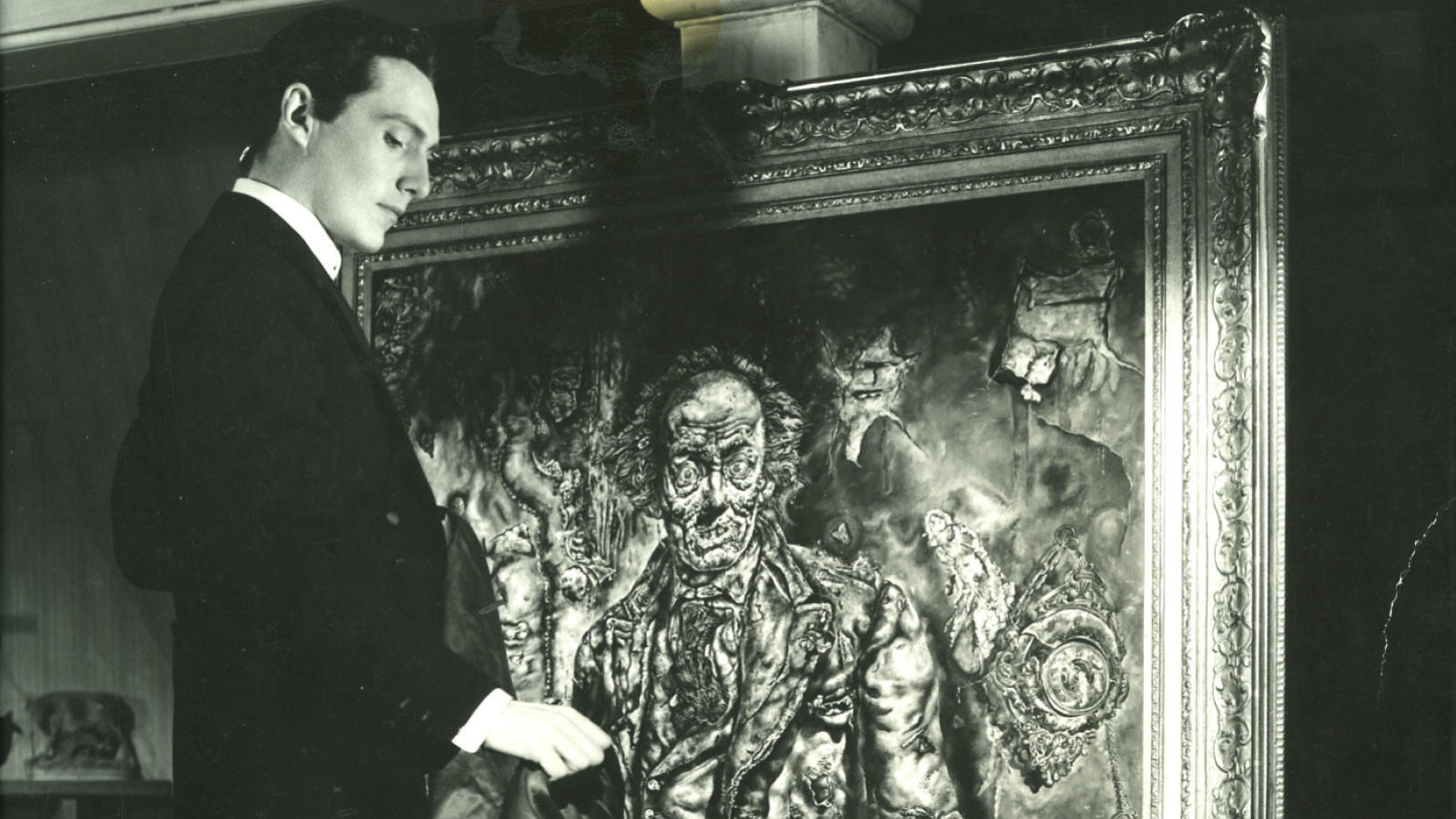
So, don’t bother looking at the very essence of complacency, conceit and condescension that is so salaciously summarized in the portrait below:
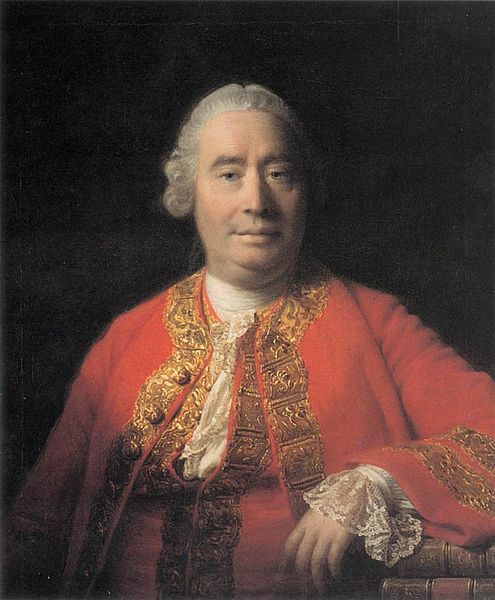
I said don’t bother looking. If you simply do what I directly advise you not to do, you can’t blame me for the consequences of your actions.
I’m afraid that my sympathies are very, very limited in this respect.
Anyway, this later work, of a deeply penitent, elderly Hume fell off the back of a lorry somewhere just north of Hadrian’s Wall on the southbound carriageway of the A1(M) …
***
In defence of this total madman, he was a mere creature of flesh and blood, allergic to zombies (apparently, it was the existence of body that he agonized over, not that of his mind), but not above an interest in the supernatural, on which he wrote some famous dialogues. On which, this musical note …
There now, that’s better, isn’t it? So, let us start our studies, now that we are fully refreshed.
####################################
___Book ONE: Of the Understanding (or a short Critique of Pure Lunacy)__
All the really enters your mind are impressions, and they are very forceful, lively and vivid. They are then converted into ideas, which are faint copies of their originals. (Best not to ask how or by whom …)
Nevertheless, these ideas can be very imaginative and exhibit a kind of complexity not to be found in the original impressions. Though apart from a missing shade of blue, the simple copies all derive from simple originals.
And it’s best not to inquire too deeply into missing colours lest you find yourself confronted with a very plain canvas that is red-and-green-all-over.
(… No, O Best Beloved, this is not the time to show off your knowledge of Vermeer and van Meegeren, least of all the fake van Meegerens which, I am sure you are absolutely correct, are also valuable in their own right.)

You really know how to rub people up the wrong way (to coin a phrase), and say the wrong thing at the wrong time, O Best Beloved …
Here beginneth another dream sequence …

… and … and, Officer, contrary to the absurd calumnies of the Rationalist Clan, with their paranoid, lens-grinding preoccupation with Reliability over Vivacity, even my coloured-copies do legitimately exist (albeit rather faintly so), and My Understanding has a legitimate role to play in creating them from the original impressions.
In any event, upon further investigation by the Fine Arts branch of the Stolen Antiques Squad, it was clearly established that neither I nor My Understanding have any provable existence beyond the impressions and ideas themselves. So there. Case dismissed.
I even gave a witness statement, which (since you obviously did not pay much attention to the first time round, I shall repeat and have set in very Sensual Stone):
“For my part, when I enter most intimately into what I call myself, I always stumble on some particular perception or other, of heat or cold, light or shade, love or hatred, pain or pleasure. I never can catch myself at any time without a perception, and never can observe any thing but the perception….”
So, if I cannot catch myself, it follows that neither can you. End of investigation. I’m free to go now, so Good Morrow to you, my good man …
***
… You may call it a Transcendental Argument, but I simply fail to see why I should have to prove anything that might incriminate me. As I keep telling that Time Lord from Burgher-of-the-King (possibly something is lost in the translation, but I think that is where he said he was originally from),

whose Real Name I dare not try to pronounce as it invariably causes offence among the more poorly educated members of the local law-enforcement chappies …
And no, I can’t explain why the law-enforcement officers are now about to sound as though they come from a large town a few miles to the west of my home. Dream sequences have their own anarchic rules.

… and precisely what do they mean by … ‘Get On Weeth Eet, ye leetle ****, yuh cannae git awaya weeth Murrderr heere, Jummeh!‘
Well, actually, I shall get to my Point (whatever and wherever it is) in my own time, not theirs, still less the Time Lord’s time, which he tells me only exists in the World of Appearances anyway.
Now, (cue dramatic drum roll)
… my basic extremely logical defence (I won’t call it an apology) is this:
You cannot intelligibly ask the question-schema, ‘How is X possible?’, unless you have already proved that the sub-question-schema ‘Is X possible?’ has an affirmative answer. Should it have a negative answer, the whole line of questioning undercuts the very conditions under which such interrogation makes any sense.
This is really true – and true-in-itself, and not merely apparently-true (though it is that as well) – and so we may now universally quantify over the variable ‘X’, and that will cover all of your weaselly ways that the You-as-it-appears-to-Me-if-not-to-You-Yourself have of trying to ensnare the innocent.
The detachment rule for the universal quantifier with an individual constant (or proper name -eurrgh!!) will complete this Transcendental Deduction Categorically. And not a hint of a patchwork, either. Isn’t that clever?

Elementary, my dear Fichte (who he?), now go and tell the German Nation everything it wants to hear. (Neither you nor it exists-in-itself anyway, so who will notice the difference?)
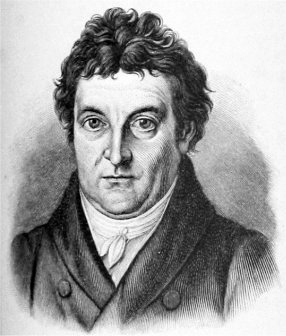
Now, put that in your pipe and smoke it.
****
___Book TWO: Of the Passions (the moderate sort only, of course)___
It is quite clearly not contrary to reason to prefer the destruction of the whole universe

to the moving of my little finger.

The universe always was a bit disappointing, and just what is the difference between my moving my little finger and my little finger’s just moving? Just see if I care if you subtract the latter from the former and be equally disappointed by the remainder.

As for having a passionate attachment to anything …,that is not contrary to reason, is but not demanded by it either.

We have already come across the Problem of Free Will. Here are Two Concepts of Liberty, both equally undesirable.
The Liberty of Spontaneity …

and the Liberty of Indifference
It may be unclear to you lads and lassies from Generation Z why gambling with your future (tumbling dice – geddit?) is a Dangerous Activity, one which could endanger your immortal soul (if you had one, that is, and you don’t).
So here is an Awful Warning from The Future …
Well, that was encouraging, wasn’t it?
Now, it is a matter of intense debate whether the Scottish and English Enlightenments were separate, or part and parcel of a global phenomenon. The highlight of the English Enlightenment is generally agree to be the Glorious Revolution of 1688, whereas not much of value happened in Edinburgh until after the Act of Union (1707).

We won’t mention the Irish.

Or the Welsh, for that matter

So what’s to do? What can be done to ensure that we do not return eternally to the Dark Ages?

A-and can we be c-certain that matters are so dire?
Well not much remains absolutely certain, but if the Enlightenment taught Humanity anything, it is that …
… Education remains an Absolute Force For Good

I mean, like, let’s face it … you can forget how to run away from Sandmen – and even how to dance the latest dance crazes – but you can never forget how to read. Can you?
Now, before your milk-and-biscuits break, here is a short in-class examination.
Do not fail it, unless you wish never to find out how not to get an ought from an is, and end your very promising careers by selling fruit somewhere in Bolton …
Oh, all right then, just one more little musical number. (Whatever happened to God Save the Queen, for Chrissake?)
Aha! Here comes The Cavalry, aka the OFSTED inspectors, albeit in mufti …

And now for a properly conducted lesson. About time too.
Here Endeth The Lesson. We’ll worry about Book THREE of the New Treatise on some other occasion …
 Philosophy and telepathy: an open discussion