
I am a Lecturer in Philosophy at Lancaster University, https://www.lancaster.ac.uk/ppr/people/nick-unwin
and am experimenting with the blog format as a way of linking together complex ideas in a more flexible way than is possible using traditional formats, such as articles and books.
If you want to know more about the ancient city of Lancaster, it is on the M6 motorway about half-way between London and Glasgow, right next to the famous seaside town of Morecambe, not much known for its celebrated musical links. Yes, you heard me right the first time …
*************************
The problem with ordinary prose is that it is linear – i.e., one-dimensional. After one paragraph you can get only one other paragraph (the next in line) until the prose just ceases. You cannot, for example, divide the discussion into Thesis and Antithesis which run parallel and independently of each other until reunited into a Synthesis – unless, of course, you split the page into two columns, something that
Kant, in his Critique of Pure Reason (1781),

Immanuel Kant (1724-1804)
was one of the first to do. Still less can you have the kind of complex interlocking structure of pages made popular by the world-wide web.
True, the stream of consciousness within which our ideas are situated is linear, unless you are one of Gazzaniga‘s [https://en.wikipedia.org/wiki/Michael_Gazzaniga] split-brain patients (or something even more exotic that science fiction might consider).

But to re-examine a particular line of thought requires fixing a portion of the stream and running it past another in a way that makes little hydraulic sense unless we come to understand better the pure flow of ideas, as distinct from their imperfect verbal cloaking.
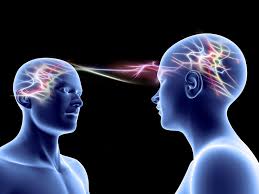
Moreover, would not mind-to-mind communication be better if we could get past the constrictions of language?
This sounds like telepathy, does it not? Well, quite! So watch this space …

And if you want to know where the above blondes came from, here is a musical clue:
In the meantime, read my foundational “ur-paper” titled ‘Epistemology and the Directly/Merely Distinction’, which is on this blog (somewhere). And enjoy 🙂
 Philosophy and telepathy: an open discussion