
Okay, so you don’t see colours in this way …
(It’s a digitally edited photo of Magdalen Tower taken from Oxford’s Botanic Garden, by the way, not an unedited photo taken of its counterpart in a nearby possible world, in case you were wondering. As you do)
… and never did (but is your memory deceiving you – even your very short-term memory)?
Does your new-found Martian friend see it in that way? Would anything in her use of language tell you?
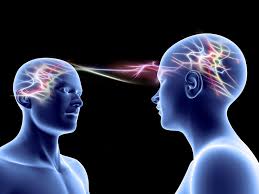
If not, would direct telepathic communication decide the matter one way or the other? (Do you see her mind in the same way that she sees her mind? What do we mean by that, incidentally?)
Would a bat‘s echolocation system have a phenomenology similar to this? Or a pigeon‘s tetrachromatic (or even pentachromatic) colour vision?
Come to think of it, what is it really like actually to be a pigeon? Can we find a way of imagining it accurately? (It is not enough to walk like one, and feast on other people’s sandwiches, by the way. It’s the inner mind that needs to change – and drastically, so.)
Unfortunately, Thomas Nagel‘s writings all seem to be copyright protected, so I cannot link you there. You will just have to look him up …
Meanwhile, here are some more pretty photos – this time, of a Hawaiian sunset. Spot the Martian. And the Venusian. And the Earthling. They are all keen photographers.


So why are these pretty photos of philosophical or scientific importance, I hear you ask, eh? (Yes, I can hear your thoughts and questions: I’m a telepath, remember, and so will you be – soon.)
Well, to cut a very long story short …
… there is some controversial scientific evidence that suggests that colour phenomenology and physiology are linked in such a way that facts about the latter can genuinely explain facts about the former. So, if we consider the fundamental question:
Why do colours look the way they do?
it may be that something useful can be said. This is worth noting, since the conventional philosophical view says otherwise. Joseph Levine, for example, talks here of an explanatory gap: the point being that no fact about the physical can explain anything very interesting about the mental.

To put it another way, colour phenomenology does not supervene on colour physiology: we cannot predict the former from the latter – even if we were to know everything about physical science. Indeed, there is a possible world just like ours in all physical and physiological respects, but wildly different phenomenologically. The immediate appearances of things, the qualia as they are called, are completely out of the control of physics, chemistry, biology, physiology and any other respectable science.
If right, this would mean that the doctrine that philosophers call physicalism would be false, and so would the ordinary scientific picture of the universe, where there is nothing but atoms and the void, as the ancient Greeks put it (long before we knew about the atomic theory of matter, as it happens).

But C.L. Hardin, for example, says that there is evidence that would suggest that colour phenomenology is reducible to physiology after all.
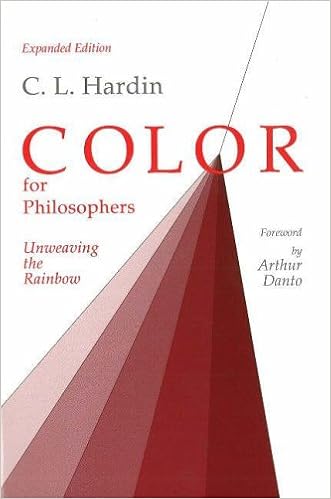
Where is this evidence? To see this, we have to examine the views of early colour vision scientists, particularly those of Ewald Hering. (Though not right now. We’ll see more of him elsewhere …)

_______
However, the important – and most immediately relevant – thing is this. If your colour phenomenology is hidden from me, then so is your mind. In which case, telepathic communication would be ruled out immediately. Contrapositively (as logicians say), if such communication is in principle possible, then colour phenomenology cannot be hidden from public view after all.
So, which inference is the more plausible? (Remember that one person’s modus ponens is another’s modus tollens. As the Bi-Coloured Python Rock Snake would put it. So beware, O Best Beloved …)

The problem of how to come to terms with an alien consciousness is very deep, and some say that the very idea of communication requires basic agreement on fundamentals which (if right) would rule out much of SETI (the Search for Extra-Terrestrial Intelligence). We won’t go into that just yet, however, still less explain just what is meant by radical translation.
By the way, for a deeply subversive account of all of this, see (if you dare) this little-known masterpiece (Palgrave, 2007):
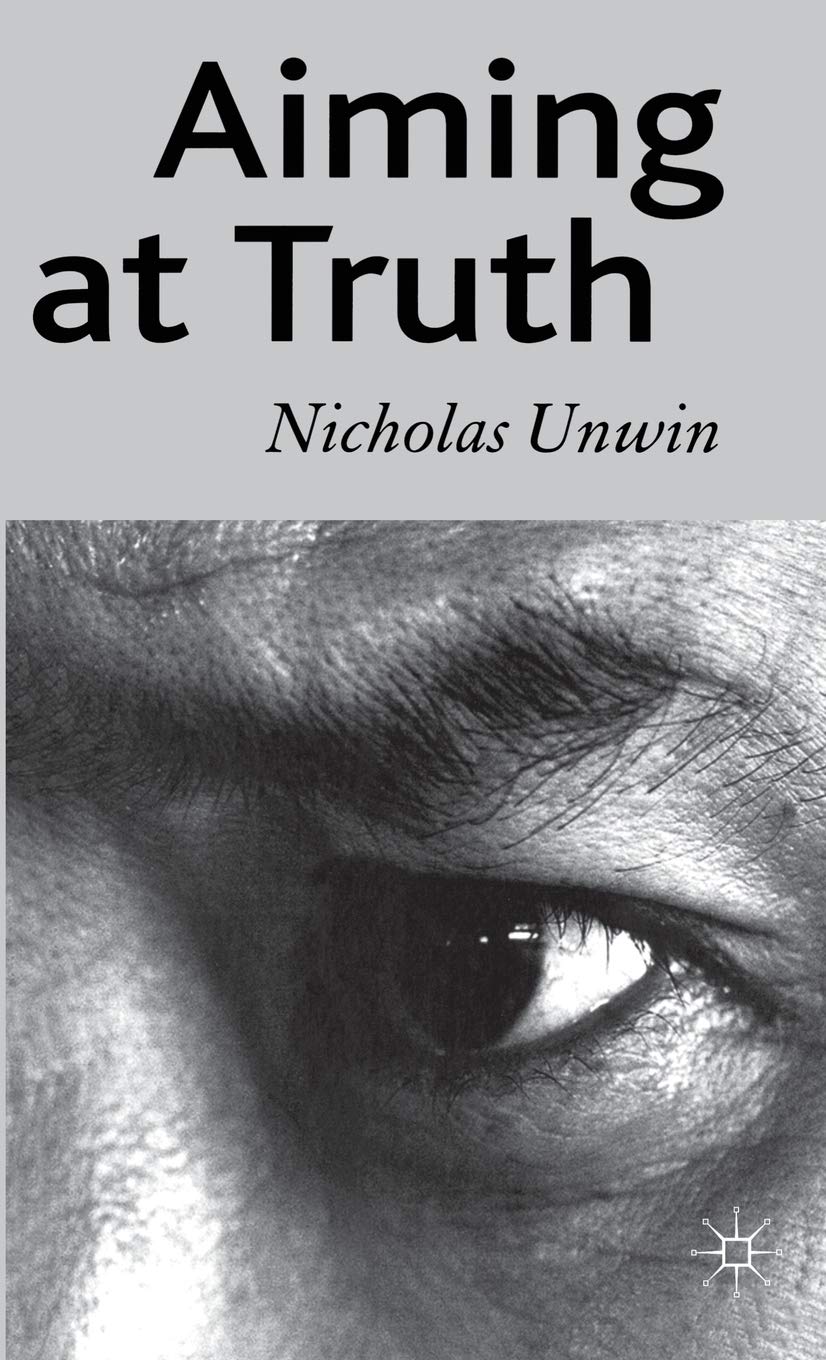
There is also a soft-cover version, but it is not as nice to look at.
In the meantime, here is a video clip chosen to be deliberately unhelpful. 😦
See you later. Perhaps you are ready to start on Causation and Communication somewhere on this blog … somewhere …
 Philosophy and telepathy: an open discussion